Hometown: Philadelphia, PA / Ciudad Juárez, MX (long story, ask me about it!) Education Background: Camden County Community College (A.A.); University of Pennsylvania (B.A. – Archaeology, Minor in Archaeological Science)
How did you get interested in your field?
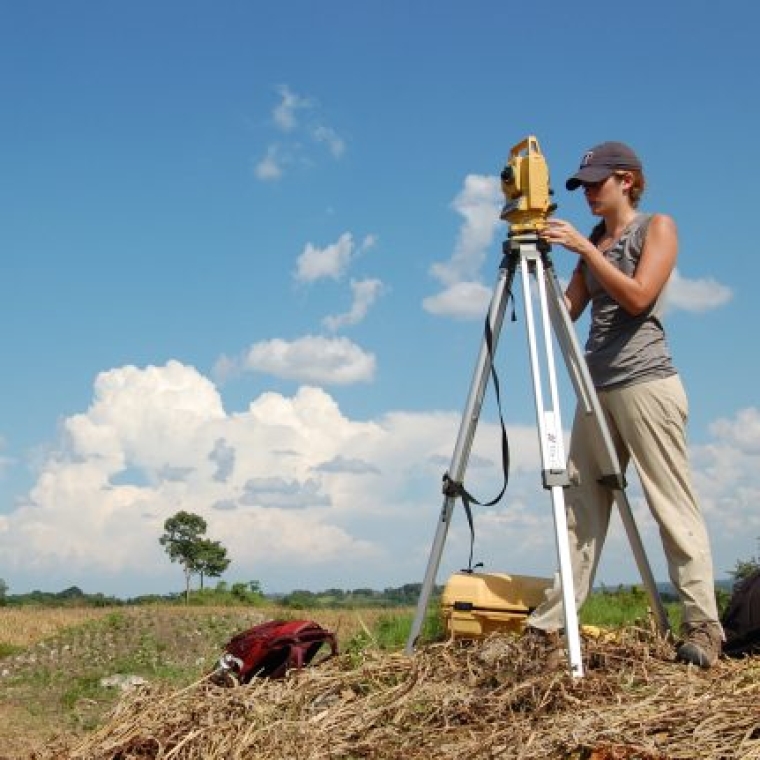
My path into historic preservation grew out of my background in archaeology. For five years, I worked on a prehistoric Native American mound site in Mississippi, where I shifted from geoarchaeological analysis to community-oriented archaeology. My thesis, “Familiar Landscapes,” explored how often disparate communities stay connected to places through shared lifeways and landscapes, even across time and cultures. In a region shaped by the legacies of colonial violence, I argued that highlighting these shared values can empower present-day communities to become stewards of heritage that may not be their own. That experience ultimately led me to historic preservation, where I hope to continue finding ways to engage and empower communities in preserving their past while strengthening our shared future.
What was your background prior to coming to Penn?
I graduated from Penn in 2020, right as the pandemic hit, which forced me to think carefully about career options. At the time, I was considering law school focusing on cultural heritage law, so I began working at an immigration law firm. Ultimately, I realized that law wasn’t the right path for me. Still, the five years I spent there taught me invaluable skills in advocacy, research, and Federal Immigration law, skills that have a lot of overlap with what I’m doing now.
Why did you choose Penn?
I have a strong connection to Philadelphia and Penn as both a native of the city and an undergrad alumna. The city’s preservation challenges and opportunities are unique, and the projects and research from the Penn Museum and Weitzman are particularly inspiring and engaging to me. The faculty’s expertise and the program’s emphasis on balancing theory with practice made Penn the perfect place to continue my education. I feel like they are preparing me for a practical career path in the field.
What has been your favorite class so far?
It’s currently a tie between Theories of Historic Preservation and Historic Site Management. Both have pushed me to think critically about how we define value, what methodologies we us, and how we balance preservation with contemporary community needs.
What are you learning right now that will help you in the future?
I’m learning how preservation theory translates into practical tools for site management, policy, and community engagement. Courses like Historic Site Management have given me frameworks to think about balancing preservation with contemporary use, while Theories of Historic Preservation has helped me critically examine why and how we preserve in the first place. These lessons are directly shaping how I envision managing a historic site in the future, one that honors its past while serving its community today and into the future.
What do you like best about Philadelphia?
Philadelphia is gritty, beautiful, and resilient. Its incredible food scene, cultural diversity, ease of walkability, and deep history make it unlike any other city. What ties it all together is the spirit of its people; the working-class roots, pride in community, and a refusal to conform. Plus, it’s home to the best sports teams in the country. I bleed green - Go Birds!
What kinds of activities and/or organizations are you involved in?
I serve as a Research Representative for GAPSA (Graduate and Professional Student Assembly), I’m on the Weitzman Student Council (StuCo), and I’m a Student Ambassador for the Historic Preservation Program. I’d like to add more to this list, but for right now, I’m just focused on getting through the hundreds of pages of reading my professors have assigned and thinking about the perfect summer internship.
What are your career ambitions?
I hope to work for the National Park Service and, ultimately, to manage or consult on a historic site that is an active part of its surrounding community. My goal is to create spaces where preservation is not only about safeguarding the past, but also about enhancing the present and future for the people who engage with the site as part of their quotidian landscape. I am especially committed to ensuring that historic sites are welcoming, accessible, and shaped through community action and collaboration.