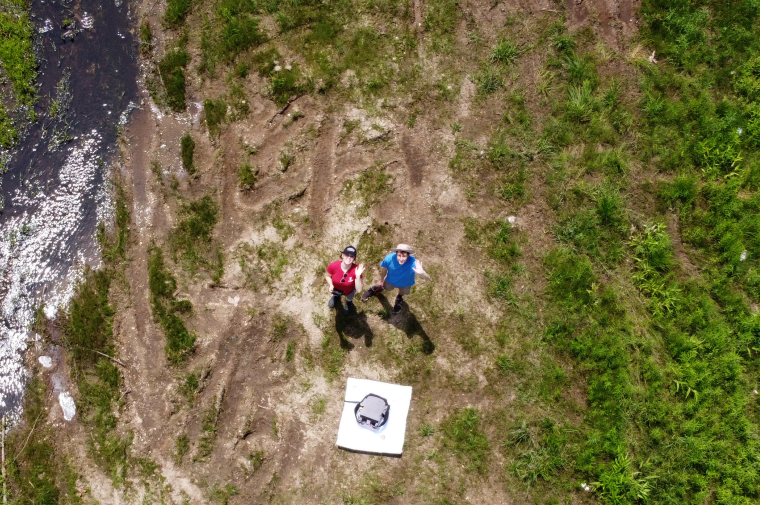
Can design be an expression of a nation’s sovereignty? Can it aid communities in the pursuit of justice? The revitalization of a Minnesota historic site known as Fort Snelling, which is associated with both the origins of the Dakota people and their exile, became a test of these questions.
The site is the subject of “Genesis and Genocide: The Dakota Effort to Reclaim Fort Snelling,” a new report by award-winning environmental writer and critic Timothy Schuler produced for PennPraxis as part of a new open-access library called Case Studies in Design.
Case Studies in Design was developed to create opportunities for community and design leaders to think together about ways to catalyze transformational design, planning, and place-keeping from the ground up. The project’s goal is to stimulate dialogue between public agencies, funders, community leaders, schools, and the architecture, landscape, planning, heritage and art fields by sharing experience through a public library, now available online, and a public summit, planned for January of 2027.
“We hope to build conversation among thinkers and doers in community organizations, movements, public agencies, schools, and the architecture, landscape, planning, heritage and art fields,” says Ellen Neises, the Lori Kanter Tritsch Executive Director at PennPraxis, the practice arm of the Weitzman School of Design.
The case study projects range from outstanding examples of community-engaged design practice to more radical roles and results of interdisciplinary work within movements. The first set of Case Studies includes:
“Genesis and Genocide: The Dakota Effort to Reclaim Fort Snelling” by Timothy A. Schuler
“Living Lab Northern Rivers: A Case Study in Recovery Planning Co-design” by Barbara Brown Wilson
“Church Grove: A Case Study in Self-Build Housing” by Deborah Gans and Lawrence Blough
“From Abandoned Gas Station Brownfield to Arts + Resilience Community Hub: Seattle’s Mini Mart City Park” by Catherine De Almeida
“IFRC Park in Geneva” by Allison Nkwocha and Isobel Zoe Morrison
“Clubcommission Berlin” by Andreina Seijas and Lutz Leichsenring
“Machan: Play, culture and community space in Dhaka” by Farasha Zaman, Ruhul Abdin, and Kazi Arefin
“UTOPÍAS, Iztapalapa” by Zach Mortice, Karol Yáñez, and Itzel Fuentes
“Over the Rhine, Cincinnati” by Danilo Palazzo and Vikas Mehta
When it is completed, Case Studies in Design will include a total of 15 projects. The aim is to study places where design and planning helped build community power, and where community-led processes produced new forms of design agency through: (1) Deep conversation to shape the nature and time horizon of the project; (2) Openness and deference to rooted leadership; (3) Reciprocal (not extractive) processes, creatively designed; (4) Collaboration and resource-sharing; and (5) New alliances to achieve leverage.
PennPraxis is a nonprofit design and planning practice that supports applied research and action in communities that design doesn’t typically serve. The organization works with community and indigenous leaders, Weitzman faculty members, and other collaborators on “beyond the market” projects that actively promote justice, inclusion, innovation, and social impact.
PennPraxis invites proposals for the next six Case Studies in Design, with proposals from authors due December 1, 2025.


 Expand Image